
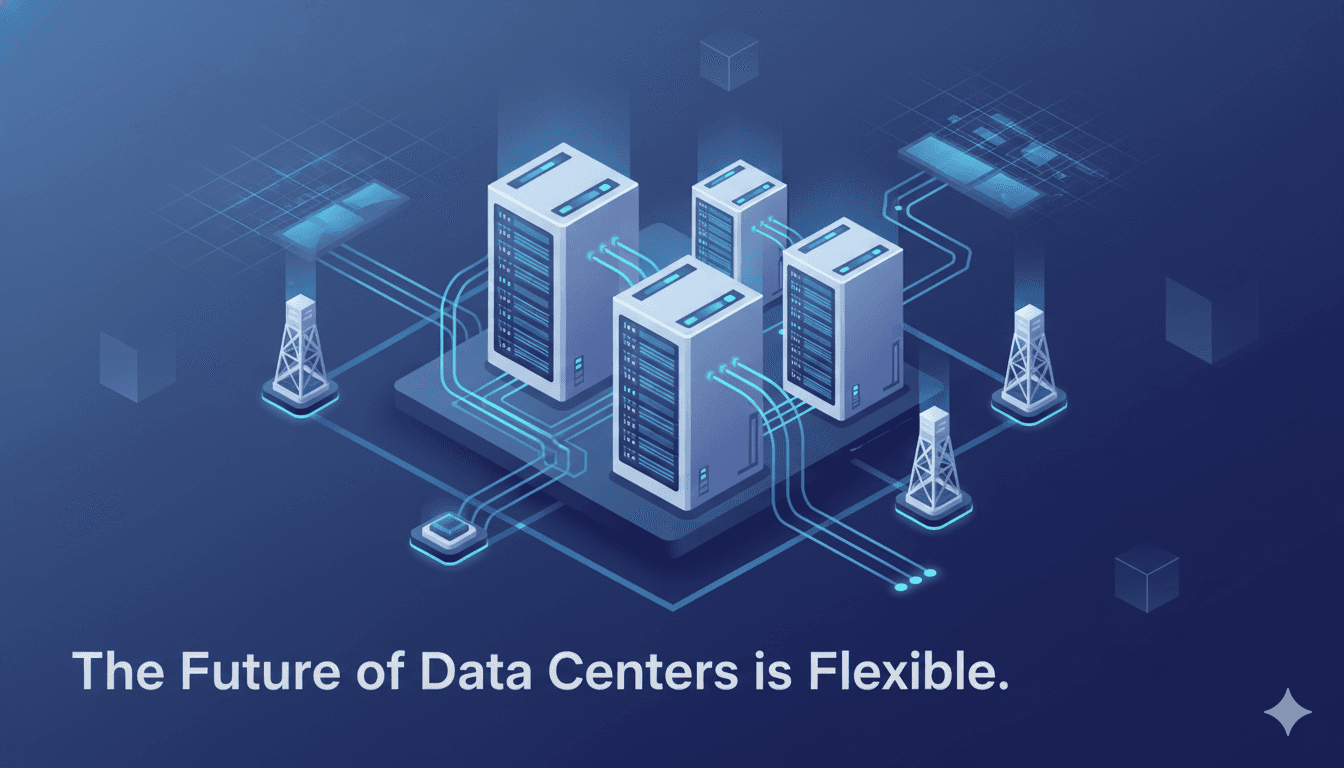
The Future of Data Centers Is Flexible
The Data Center Power Crunch
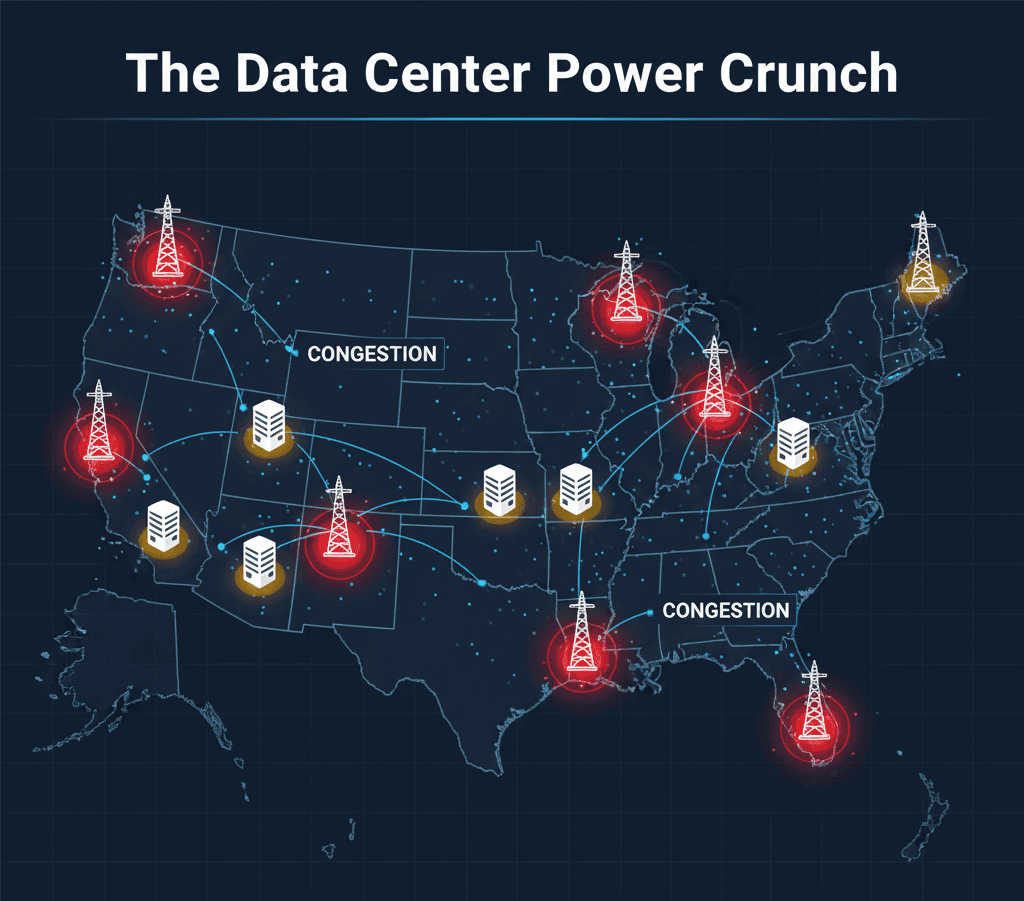
Everyone’s talking about the power crunch in data centers. AI workloads are skyrocketing, utilities are overwhelmed, and power availability is quickly becoming the limiting factor for digital growth.
But here’s the truth, we don’t actually have a power shortage.
We have a timing and distribution problem.
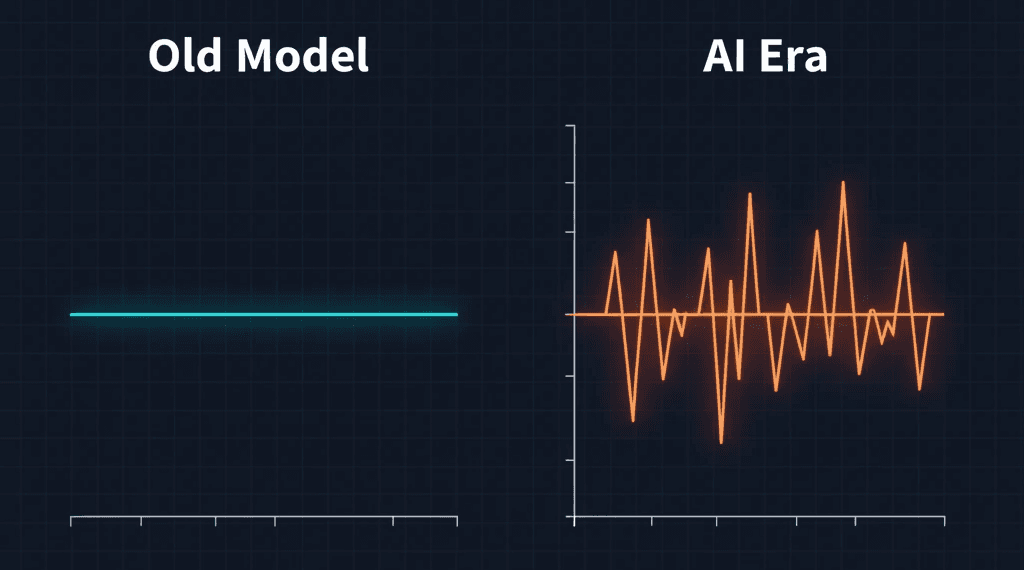
The grid doesn’t always know when power needs to be available. AI data centers, in particular, create massive, unpredictable bursts of demand, sometimes hundreds of megawatts at a time.
For years, utilities studied and served these facilities as if they were static, steady loads, and predictable. But modern data centers are anything but. They’re dynamic, spiky, and increasingly intelligent, constantly shifting based on workload and GPU demand.
That’s where a new idea called data center flexibility comes in. Operators and utilities are now exploring whether data centers, once designed to resist any form of fluctuation due to their mission-critical nature and uptime requirements, can safely flex. Thanks to advancements in AI-driven facility management and orchestration, it’s becoming possible to dynamically manage power, cooling, and IT workloads without compromising reliability.
From Rigid to Responsive
Historically, data center load was predictable. Operators designed around peak energy use, say, 100 megawatts, even though actual consumption might hover around 60 or 70. The grid had to stay ready for the peaks, wasting valuable capacity.
Now, AI has changed everything.
Training and inference workloads cause huge swings in power draw. Utilities are asking: can these new AI factories become flexible?
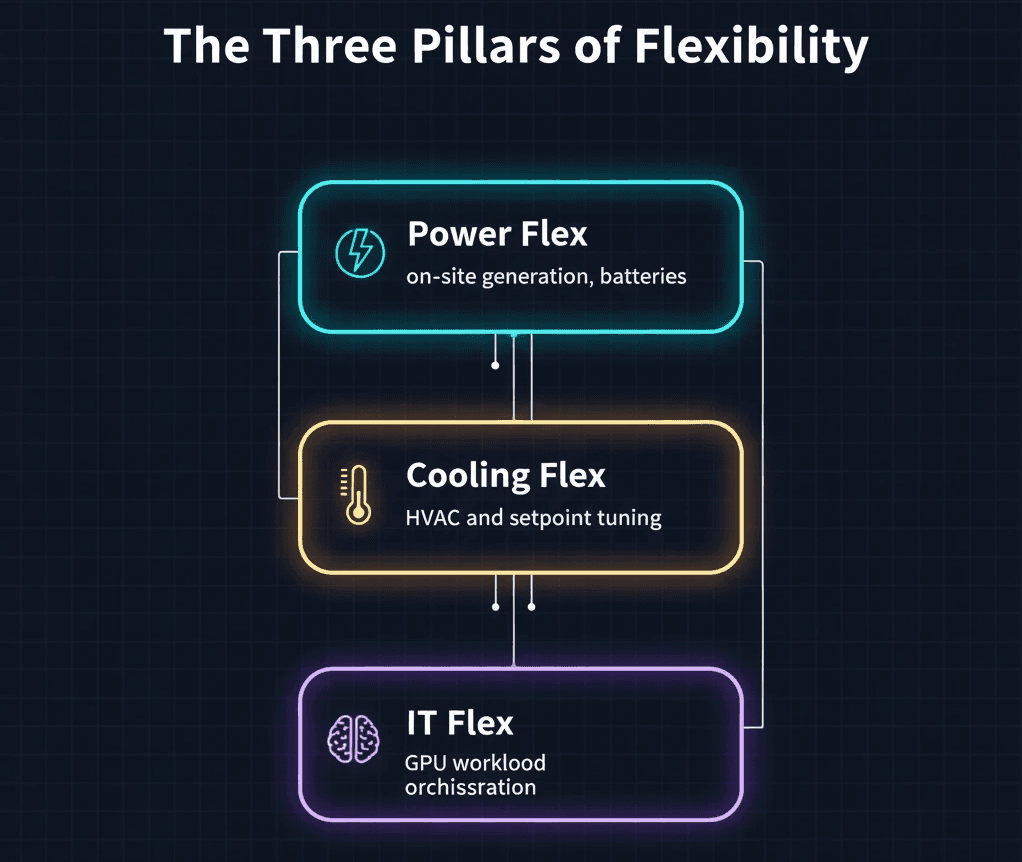
The answer is yes, through three types of flexibility.
The Three Pillars of Flexibility
Power Flex – Using on-site generation like solar, natural gas, or even diesel to reduce strain on the grid during peak hours.
Cooling Flex – Adjusting HVAC systems, fan speeds, and temperature set points to lower load without risking uptime.
IT Flex – Modulating GPU workloads, clock speeds, or scheduling compute jobs when energy is cheaper or cleaner.
Each type of flexibility requires coordination between hardware, software, and safety systems. And because data centers are mission critical, changes must be automated, reversible, and safe.
The Challenges
Flexing a live data center isn’t easy.
Three big challenges stand out:
Safety: One wrong change to cooling or power could trigger outages or damage hardware.
Predictability: Knowing when and how to flex without disrupting operations is a complex orchestration problem.
Service Level Agreements (SLAs): Traditional data centers promise “five nines” uptime. New Power Flex SLAs introduce variable uptime tiers, trading constant availability for lower cost and energy flexibility.
AI as the Orchestrator
This is where AI-driven facility control changes the game.
At FLUIX AI, we’re training models to understand and flex cooling, power, and compute. safely and autonomously. The result is an AI Autopilot for Data Centers that helps operators reduce energy use, maintain uptime, and coordinate with utilities in real time.
We’re already deploying across sites in the U.S. and Latin America, helping operators maintain service levels while saving energy and supporting grid stability.
The Future: Power as a Dialogue
In the next era, data centers won’t just consume power, they’ll communicate with it.
They’ll know when to flex, when to rest, and when to accelerate. They’ll work hand-in-hand with utilities to build a smarter, more resilient grid.
The future isn’t about more power, it’s about more intelligent power.
And it starts with flexibility.
- Abhishek Sastri