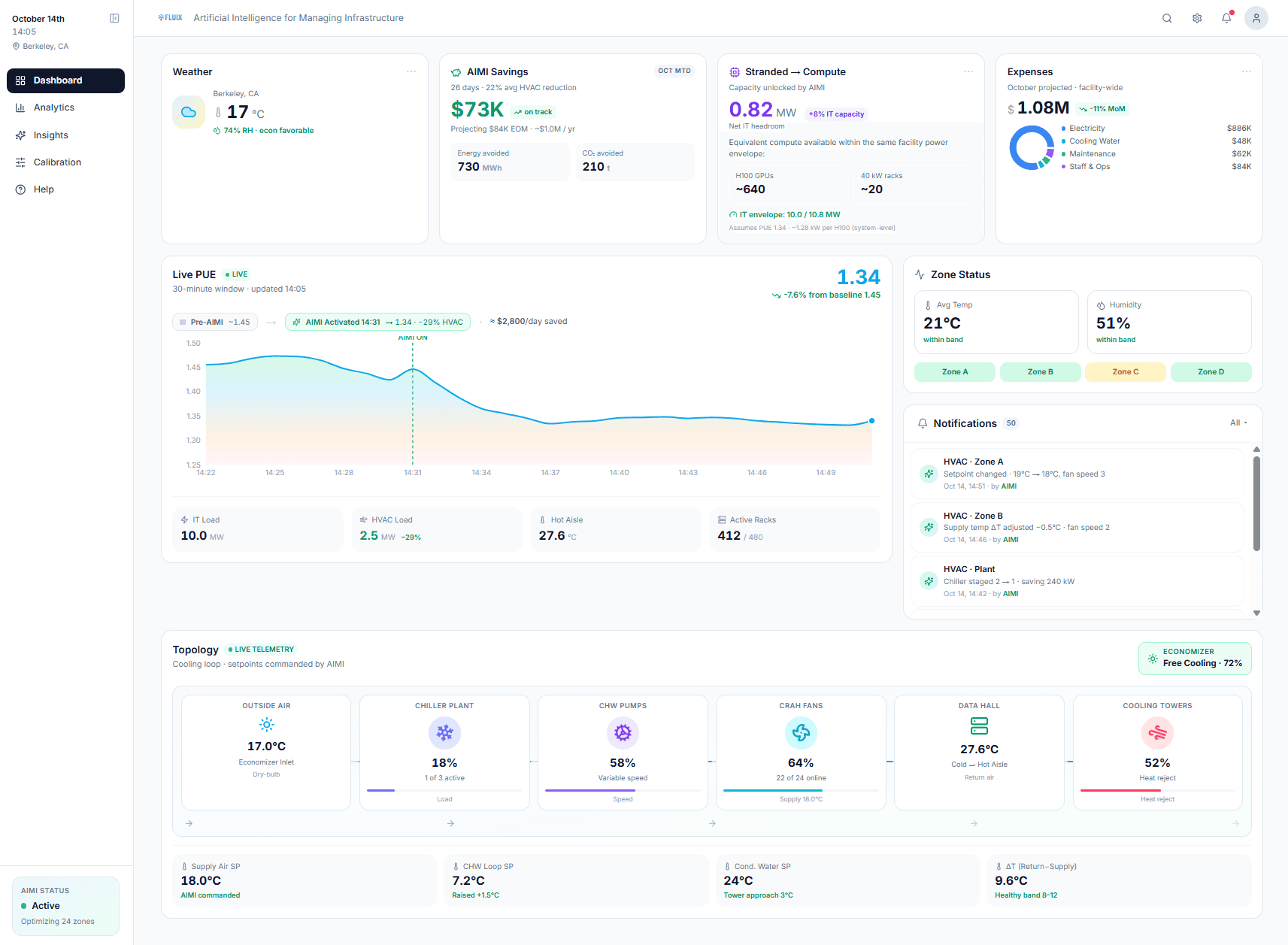
AIMI replaces legacy, rule-based building management with autonomous control of cooling and facility systems—improving efficiency, reliability, and grid responsiveness without new hardware.
AIMI replaces legacy, rule-based building management with autonomous control of cooling and facility systems—improving efficiency, reliability, and grid responsiveness without new hardware.
AIMI replaces legacy, rule-based building management with autonomous control of cooling and facility systems—improving efficiency, reliability, and grid responsiveness without new hardware.
Legacy building management systems rely on static rules and manual tuning, making it difficult to maintain efficiency and reliability as data center conditions change.
AIMI replaces rule-based control with autonomous decision-making. It continuously coordinates cooling, airflow, and facility systems as a unified control layer—optimizing energy efficiency, maintaining SLA constraints, and adapting in real time without operator intervention.
Legacy building management systems rely on static rules and manual tuning, making it difficult to maintain efficiency and reliability as data center conditions change.
AIMI replaces rule-based control with autonomous decision-making. It continuously coordinates cooling, airflow, and facility systems as a unified control layer—optimizing energy efficiency, maintaining SLA constraints, and adapting in real time without operator intervention.
Legacy building management systems rely on static rules and manual tuning, making it difficult to maintain efficiency and reliability as data center conditions change.
AIMI replaces rule-based control with autonomous decision-making. It continuously coordinates cooling, airflow, and facility systems as a unified control layer—optimizing energy efficiency, maintaining SLA constraints, and adapting in real time without operator intervention.
How Autonomous BMS Works Three AI-driven control capabilities operate continuously to optimize efficiency, reliability, and grid responsiveness.
How Autonomous BMS Works Three AI-driven control capabilities operate continuously to optimize efficiency, reliability, and grid responsiveness.
How Autonomous BMS Works Three AI-driven control capabilities operate continuously to optimize efficiency, reliability, and grid responsiveness.
Autonomous Control
Autonomous control of cooling and facility systems
AIMI continuously optimizes cooling and facility operations in real time, adapting to changing load, thermal conditions, and operational constraints without manual intervention or additional hardware.
30–40% autonomous energy efficiency improvement
No extra hardware required
Autonomous Demand Response to curtail load per utility requirements
Stay online during grid events while reducing facility load
Save energy to unlock stranded capacity and increase revenue per site
AI Heat Map
AI-driven thermal visibility and recommendations
AIMI generates real-time AI heat maps that reveal airflow inefficiencies and thermal risk, with clear recommendations for tile flow and equipment placement.
AI-recommended tile airflow and equipment setup
30-40 hours per month saved in manual analysis and tuning
50% reduction in SLA excursion risk
Continuous optimization as conditions change
On-Premise & Air-Gapped
Security-first by design AIMI is built for security-critical data center environments, operating fully on-premise and air-gapped with no dependency on external cloud connectivity.
Zero operational excursions across active deployments
Relevant Case studies
Relevant Case studies
Relevant Case studies
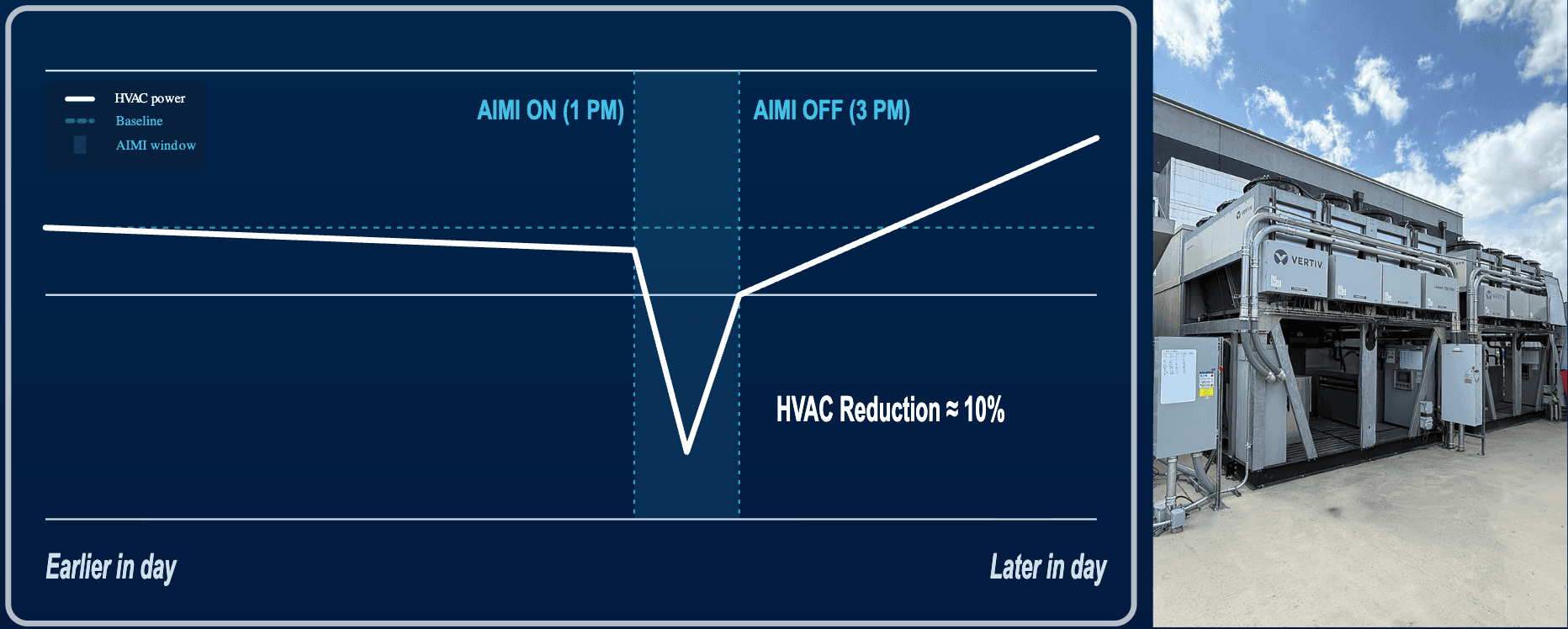
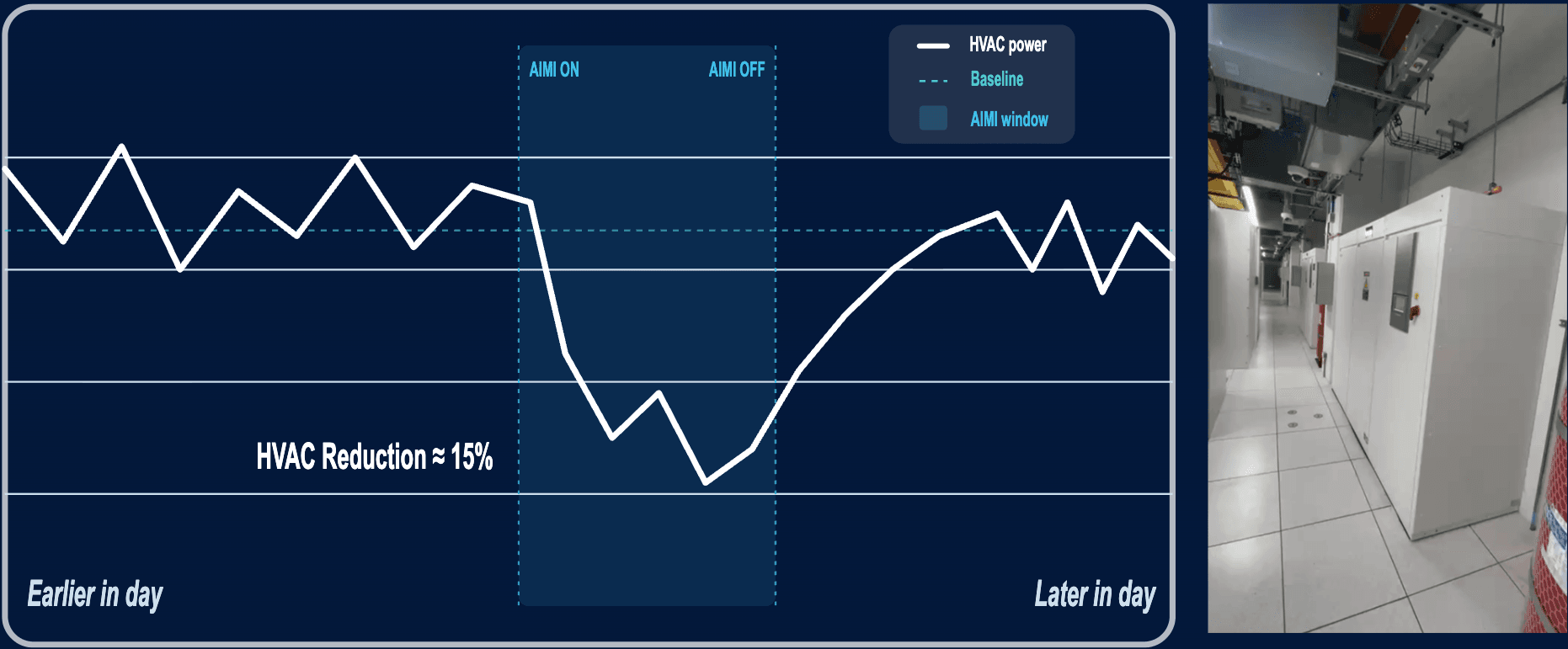
U.S. AI Factory reduced cooling load by ~10% during a grid event
U.S. AI Factory reduced cooling load by ~10% during a grid event
AIMI autonomously curtailed HVAC load in response to grid stress while maintaining operational constraints and uptime. Cooling demand was reduced in real time without manual intervention, demonstrating safe autonomous control during live grid events.
AIMI autonomously curtailed HVAC load in response to grid stress while maintaining operational constraints and uptime. Cooling demand was reduced in real time without manual intervention, demonstrating safe autonomous control during live grid events.
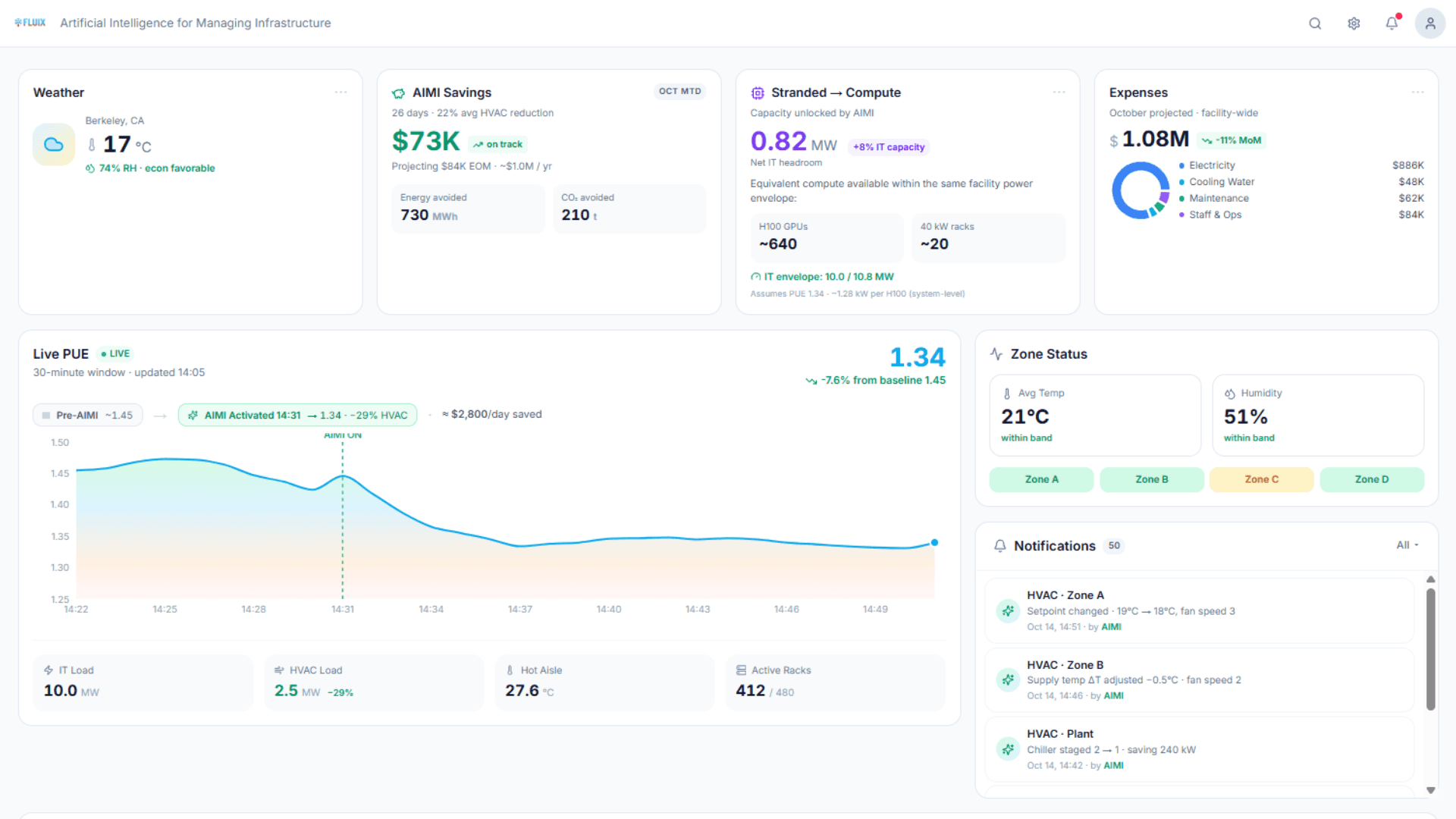
By autonomously optimizing cooling and facility operations, AIMI reduced baseline energy consumption and recovered unused headroom. The resulting efficiency gains translated directly into increased usable capacity without physical expansion.
By autonomously optimizing cooling and facility operations, AIMI reduced baseline energy consumption and recovered unused headroom. The resulting efficiency gains translated directly into increased usable capacity without physical expansion.
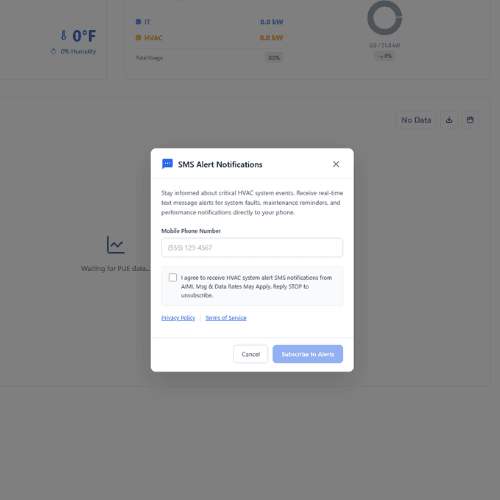
SMS Alert Notifications
Real-Time Alerts. Faster Response.
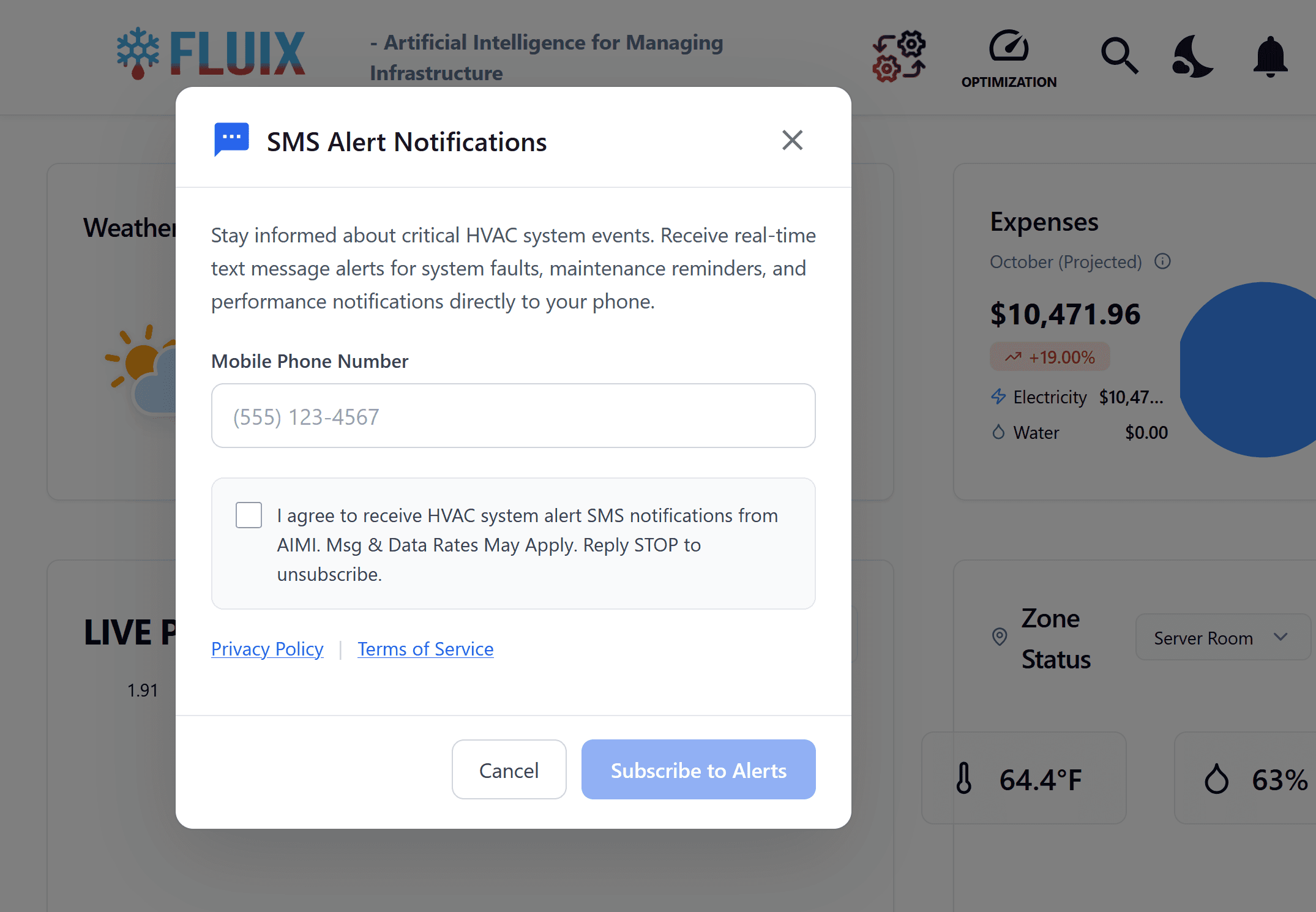
Receive real-time text alerts for critical faults, maintenance reminders, and performance issues so facility managers can respond faster, prevent downtime, and keep operations running smoothly.
SMS Alert Notifications
Real-Time Alerts. Faster Response.
Receive real-time text alerts for critical faults, maintenance reminders, and performance issues so facility managers can respond faster, prevent downtime, and keep operations running smoothly.
AIMI BMS, Explained
AIMI BMS, Explained
This demo shows AIMI autonomously controlling a live lab environment. Watch how the system optimizes cooling and facility operations in real time—maintaining operational constraints while delivering measurable energy savings without manual intervention.
This demo shows AIMI autonomously controlling a live lab environment. Watch how the system optimizes cooling and facility operations in real time—maintaining operational constraints while delivering measurable energy savings without manual intervention.
Talk to the AIMI BMS Team
Get a quick response from our team on deployment fit, requirements, and next steps.
Talk to the AIMI BMS Team
Get a quick response from our team on deployment fit, requirements, and next steps.